
Types of Spectral Analysis Methods for Audio Pros
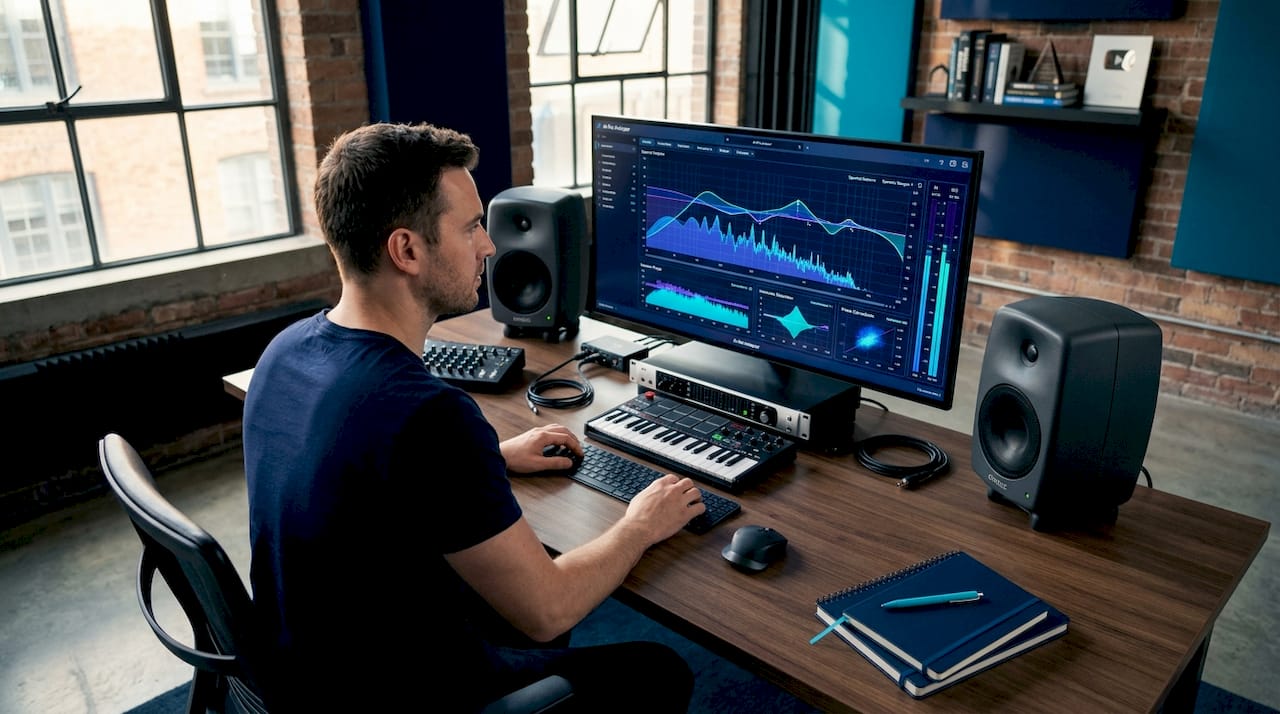
Spectral analysis methods are techniques that decompose audio signals into their frequency components, forming the technical backbone of professional mixing and sound design. The three recognized families of spectral analysis are non-parametric, parametric, and semi-parametric approaches, each suited to different audio scenarios. Tools like librosa, FlexPro, and Mixanalytic all implement variations of these methods to give engineers actionable frequency data. Whether you are EQing a dense mix or designing a synthesizer patch from scratch, choosing the right spectral method determines how accurately you read what is happening in your audio.
1. Types of spectral analysis methods: the three core families
Spectral analysis methods fall into three families: non-parametric, parametric, and semi-parametric, each defined by how they model the signal’s covariance structure. Understanding this classification tells you immediately what assumptions each method makes and where it can fail.
Non-parametric methods make no assumptions about the underlying signal model. They estimate the power spectrum directly from the data, which makes them flexible and broadly applicable. The periodogram, Welch’s method, and the Short-Time Fourier Transform (STFT) all belong to this family.
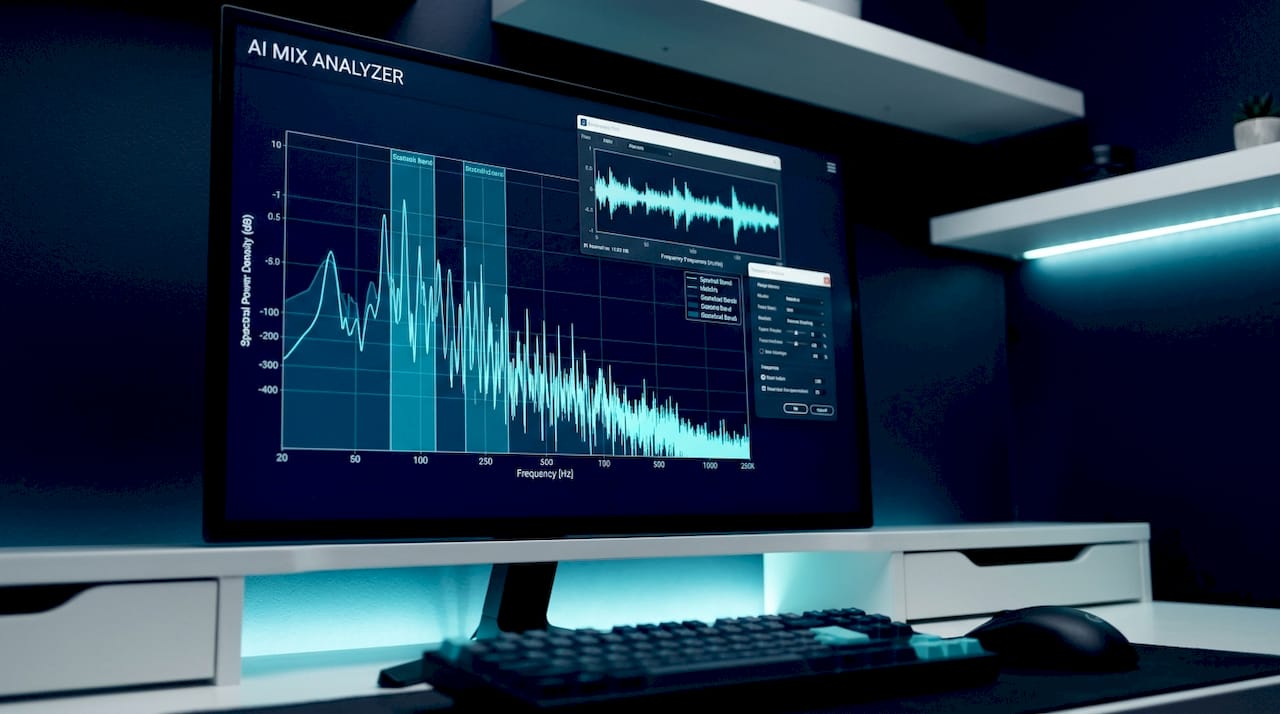
Parametric methods fit a structured mathematical model, such as an autoregressive (AR), moving-average (MA), or ARMA model, to the signal. They can deliver sharper spectral resolution than non-parametric approaches when the model matches the signal, but they carry real risk when it does not.
Semi-parametric methods combine both philosophies. They apply a model where signal structure is known and fall back to non-parametric estimation where it is not. Sparse spectral methods used in modern audio restoration software often work this way.
Pro Tip: Start with a non-parametric method like Welch’s or STFT to get an unbiased picture of your audio. Only move to parametric methods when you need sharper resolution on a specific, well-understood signal component like a sustained tone or a resonant frequency.
2. How STFT works and why it dominates music mixing
The Short-Time Fourier Transform is the most widely used spectral analysis technique in audio production. STFT computes FFTs on short, overlapping windows of a signal to produce a spectrogram that reveals how frequency content changes over time.
The core tradeoff in STFT is between time resolution and frequency resolution. A longer window gives you finer frequency detail but blurs transient events in time. A shorter window captures fast transients precisely but smears frequency information. Audio engineers working in librosa, for example, routinely adjust window size depending on whether they are analyzing a sustained pad or a snare hit.
STFT spectrograms are used for:
- Locating resonances that cause harshness or muddiness in a mix
- Identifying noise frequencies for surgical EQ or noise reduction
- Informing tuning decisions on pitched instruments
- Visualizing stereo field imbalances across the frequency spectrum
Beyond analysis, STFT-based workflows support inverse STFT and phase vocoding, which are the technical foundations of time-stretching and pitch-shifting effects in DAWs like Ableton Live and Logic Pro. The spectrogram is not just a reading tool. It is an editing surface.
Pro Tip: When using STFT for mix analysis, set your window size to at least 2048 samples for frequency-critical work like EQ decisions. Drop to 512 samples when you need to catch transient timing issues in percussion.
3. Welch’s method vs. multitaper: which gives you better spectral readings?
Both Welch’s method and multitaper spectral estimation solve the same core problem: raw periodograms carry high variance and spectral leakage that make them unreliable for precise audio analysis. The two methods take different routes to the same destination.
Welch’s method splits the signal into overlapping segments, applies a window function to each, computes a periodogram per segment, and averages the results. A 50% overlap is standard. The averaging reduces variance significantly, and the window choice controls the leakage-resolution tradeoff.
Multitaper spectral estimation takes a different approach. Instead of averaging across time segments, it computes multiple spectral estimates from the same data using a set of orthogonal tapers called Discrete Prolate Spheroidal Sequences (DPSS). Averaging these estimates reduces both variance and leakage simultaneously, without sacrificing as much frequency resolution as Welch’s method does.
| Feature | Welch’s method | Multitaper |
|---|---|---|
| Variance reduction | High, via segment averaging | High, via taper averaging |
| Leakage control | Moderate, window-dependent | Strong, DPSS-optimized |
| Frequency resolution | Reduced by segmentation | Better preserved |
| Best use case | Long, stationary signals | Short or noisy recordings |
| Implementation | librosa, SciPy | NiTime, MATLAB, R |
Multitaper is the better choice when you are working with short recordings or noisy room captures where Welch’s segmentation would leave too few samples per window. For long, stable tones or sustained mix bus analysis, Welch’s method is faster and equally reliable.
Pro Tip: Multitaper spectral analysis is particularly useful for reliable peak detection in acoustic measurement sessions. If you are measuring a room or speaker response with limited recording time, multitaper gives you more trustworthy data than Welch’s method.
4. Parametric spectral methods: AR, MA, and ARMA models
Parametric spectral methods assume the audio signal was generated by a specific mathematical process and estimate the spectrum by fitting that model to the data. AR, MA, and ARMA models are the three standard parametric estimators used in audio signal analysis.
An autoregressive (AR) model expresses each sample as a weighted sum of previous samples plus noise. AR models are especially effective for signals with sharp spectral peaks, such as resonant filters, vowel formants in voice processing, or the body resonances of acoustic instruments. Linear Predictive Coding (LPC), which powers many voice synthesis and codec algorithms, is a direct application of AR spectral modeling.
The risks of parametric methods are real and worth taking seriously:
- Model order selection is critical. Too low an order and the spectrum is over-smoothed. Too high and you get spurious spectral peaks from overfitting.
- Stationarity assumption limits usefulness. AR and ARMA models work best on signals that do not change character over time, which excludes most real-world music.
- Artifact risk is higher than with non-parametric methods. A misfit model can create peaks that do not exist in the actual audio.
Use parametric methods when you have a specific, well-defined signal component to analyze, such as isolating the resonant frequency of a guitar body or modeling the spectral envelope of a vowel for a vocoder. Avoid them for full-mix analysis where signal complexity defeats the model assumptions.
5. Wavelet transforms and auditory filter banks: beyond the FFT
Wavelet transforms and auditory-inspired filter banks represent a fundamentally different philosophy from FFT-based methods. They prioritize perceptual relevance and multiresolution analysis over uniform frequency binning.
The Continuous Wavelet Transform (CWT) provides frequency-dependent time-frequency resolution. At high frequencies, CWT gives you fine time resolution, which is exactly what you need to catch the attack of a snare or the click of a bass transient. At low frequencies, it gives you fine frequency resolution, which helps distinguish closely spaced sub-bass tones. STFT cannot do both simultaneously because its window size is fixed.
CWT uncovers audio features that STFT spectrograms miss entirely, particularly in signals with both fast transients and slow harmonic evolution. This makes wavelet analysis a strong tool for sound design work where you need to understand how a sound’s texture changes from attack to decay.
Auditory spectrograms take a different approach. They use filter banks tuned to perceptual frequency scales like Bark, Mel, and ERB, which mirror how the human cochlea processes sound. Gammatone filter banks, for example, allocate more resolution to the frequency ranges where human hearing is most sensitive. This makes auditory spectrograms far more useful than FFT-based displays when your goal is to judge how a mix sounds to a listener rather than how it measures on a meter.
Key advantages of auditory filter bank analysis for audio professionals:
- Perceptual accuracy: frequency resolution matches human hearing sensitivity
- Better masking prediction: reveals which frequencies will be masked by louder neighbors
- Mel-frequency cepstral coefficients (MFCCs): derived from Mel filter banks, used in AI-powered audio classification and genre detection
- Practical for sound design: helps predict how timbral changes affect perceived brightness or warmth
Key takeaways
Spectral analysis method selection determines the accuracy, resolution, and perceptual relevance of every frequency decision you make in a mix or sound design session.
| Point | Details |
|---|---|
| Three core families | Non-parametric, parametric, and semi-parametric methods each suit different signal types and analysis goals. |
| STFT for general mixing | Adjust window size to balance time and frequency resolution based on whether you are analyzing transients or tones. |
| Multitaper over Welch for short recordings | Multitaper preserves frequency resolution better when recording length limits Welch’s segmentation. |
| Parametric methods need caution | AR and ARMA models require careful model order selection to avoid spurious peaks and artifacts. |
| Auditory filter banks for perceptual work | Mel and ERB-scale filter banks align spectral analysis with human hearing, making them ideal for mix evaluation. |
Why I think most audio engineers use only one spectral method when they should use three
Most engineers I have worked with open a spectrogram, look at the STFT display, and call it done. That works for 80% of mixing decisions. But the remaining 20%, the ones that separate a good mix from a great one, often require a different tool entirely.
STFT is the right starting point. It is fast, universal, and every major DAW and plugin supports it. But when I am working on a mix with a problematic low end and limited session time, I reach for multitaper analysis. The variance reduction it provides means I am not chasing spectral artifacts that do not actually exist in the audio. That alone has saved me from making EQ decisions based on noise rather than signal.
For sound design specifically, CWT analysis changed how I think about transient shaping. Seeing how a sound’s high-frequency content evolves in time with true resolution, not the blurred approximation STFT gives you, makes it possible to design attacks with surgical precision. The mix problems that AI analysis catches before mastering are often exactly the kind of spectral artifacts that a single-method workflow misses.
My honest recommendation: use STFT for navigation, multitaper for measurement, and CWT or auditory spectrograms when the goal is perceptual quality rather than technical accuracy. Combining methods is not overkill. It is just good engineering.
— Uygar
How Mixanalytic puts spectral analysis to work for your mixes
Mixanalytic gives audio engineers and students access to 17 AI-powered analysis modules covering frequency balance, dynamic range, stereo field, genre, and mood, all without the cost of a professional mastering session. The platform’s frequency analysis tools apply advanced spectral techniques to your uploaded track and return specific, mix-ready feedback in minutes. You get the kind of spectral insight that would otherwise require configuring librosa scripts or interpreting raw periodograms yourself.
The free tier includes three analyses per month, which is enough to validate a mix before sending it to mastering. For producers and students who want deeper access, Mixanalytic’s pricing options start at $5 for token packs. If you want to hear what your mix’s spectral balance actually looks like, upload a track and let the AI do the reading.
FAQ
What are the main types of spectral analysis methods?
The three main types are non-parametric methods (STFT, Welch’s, periodogram), parametric methods (AR, MA, ARMA models), and semi-parametric methods that combine both. Each family makes different assumptions about the signal and suits different audio analysis tasks.
How does spectral analysis work in audio mixing?
Spectral analysis decomposes an audio signal into its frequency components over time, typically using STFT to produce a spectrogram. Engineers use this display to locate resonances, identify noise, and make informed EQ decisions.
When should I use multitaper instead of Welch’s method?
Use multitaper when your recording is short or noisy, since it preserves frequency resolution better than Welch’s segment-averaging approach. Welch’s method is more efficient for long, stationary signals where segmentation does not sacrifice too much data.
Are parametric spectral methods reliable for music analysis?
Parametric methods like AR models can deliver sharper spectral resolution than non-parametric approaches, but model order selection is critical. Incorrect model order causes spurious peaks, making these methods risky for complex, non-stationary music signals.
What is an auditory spectrogram and why does it matter for mixing?
An auditory spectrogram uses filter banks tuned to perceptual scales like Mel or ERB, aligning frequency resolution with how human hearing works. This makes it more useful than standard FFT displays for judging how a mix will actually sound to a listener.